
What to do in the first hour
Stay calm and go to where you last saw your dog. Mark that spot on a map, because most searches radiate from it. Then split up with a plan instead of everyone running in different directions.
The steps below come from shelter staff, trainers and professional pet trackers. Their advice is based on experience, not controlled studies, so treat it as sound practice rather than proof.
The first hour, step by step
1. Return to the point of loss and map it. Film the area or drop a pin. One pet detective says lost dogs often move in a rough triangle away from where they escaped, so the spot matters.
2. Place helpers, do not crowd. Put one person at your start point, such as the car park or your front door, and one person ahead on the likely route. A crowd of searchers calling a name can make a scared dog run.
3. Search upwind when you can. A dog that is trying to find you is more likely to catch your scent if you are upwind of where it is hiding.
4. Take food and something that smells like home. A sealed bag of strong-smelling food and a worn shirt are useful once you find the dog, and a worn item left at the point of loss gives your dog a scent to return to.
5. Do not chase. A running person looks like a game or a threat to a loose dog. Walk, crouch, and let your dog come to you.
If you can see your dog
This is where advice conflicts, so here are both views and when each applies.
Shelter advice: stay silent. A shelter source says not to call, clap or whistle at a dog you can see. A frightened dog may read the noise as pressure and bolt. If you see your dog, do not run to it. Turn your body side-on or away, crouch low, avoid direct eye contact, and let it catch your scent from a few feet away. Tossing food toward you, not at the dog, works for some dogs.
Trainer advice: a trained signal can help. One trainer described a whistle that broke a chase and called the dog back. They were clear that it is not for routine use and works only because the dog already knew it well.
How to choose.
- If your dog is relaxed and keeps looking at you, a familiar cue you have used before may work.
- If your dog is wide-eyed, panting, avoiding you or has run before, stay quiet and use the turn-away method.
- If you cannot tell, start quiet. You can always add a cue later, but you cannot undo a bolt.
Either way, do not chase. Neither source recommends it.
Posters, shelters and apps
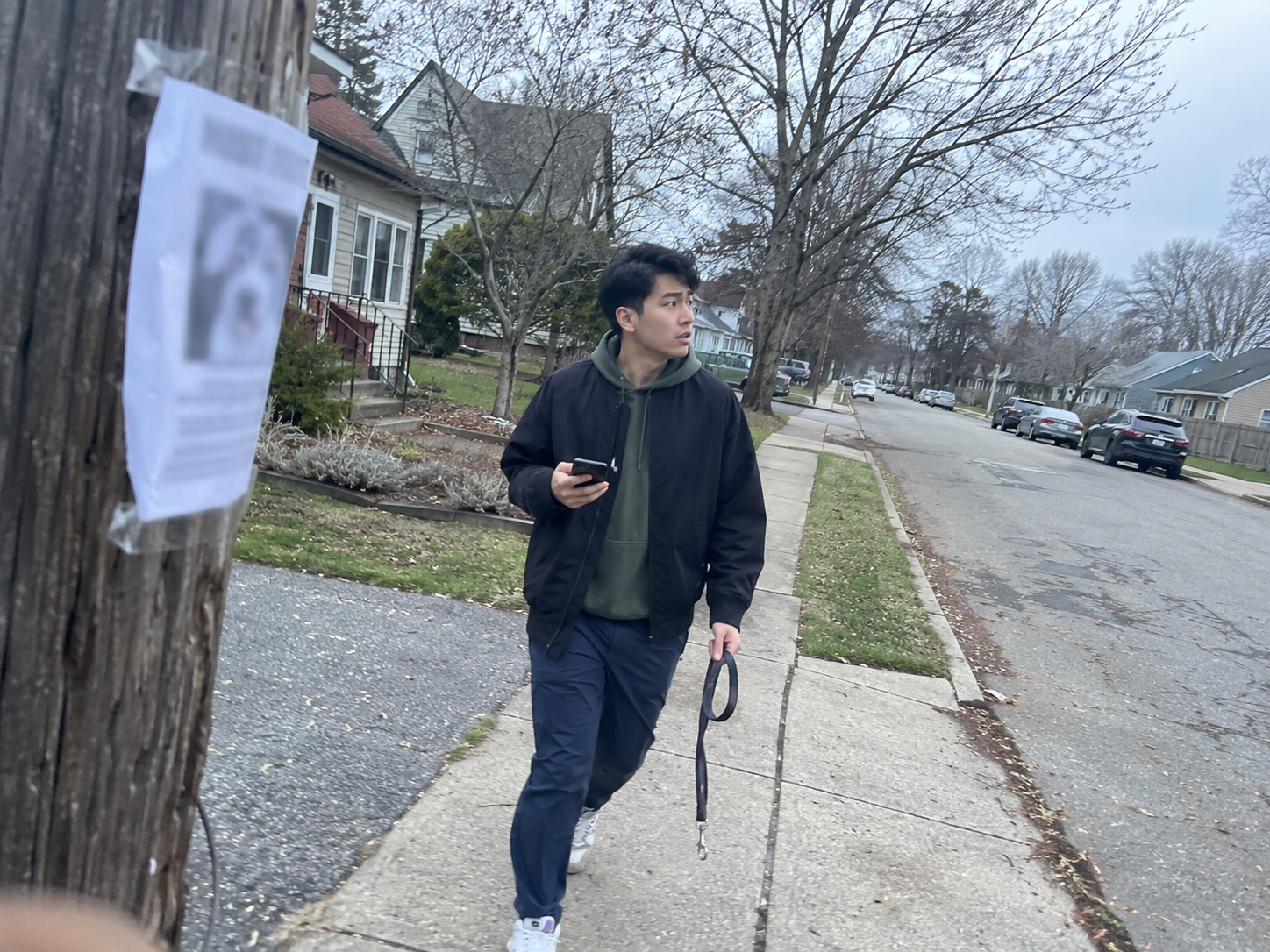
A clear poster beats a handful of small flyers. Use a very large phone number, one clear photo and the words LOST DOG. Pet trackers advise leaving your dog’s name off, because strangers who call a name can send a scared dog running. Put posters at junctions and where traffic slows, across a radius of a few miles, and refresh them within about a week (up to two weeks in rural areas).
Then work the lists:
- Call every local shelter and vet clinic and give them your photo and number.
- Visit shelters in person. Shelter staff advise checking every few days, because a description over the phone can miss your dog.
- Post in local lost-pet groups and neighborhood apps.
- Tag your car or leave a note on it at the start point so people can reach you.
Timeline: what to do and when
| When | What to do |
|---|---|
| First hour | Return to the point of loss, map it, place helpers, search quietly, take food and a scent item |
| Same day | Call shelters and vets, post online, put up posters, check the chip registry |
| Night | Dogs are often most active from dusk to dawn, so search then, quietly, with a light |
| Days 2 to 3 | Visit shelters in person, widen the poster area, keep the scent item out |
| Week 1 and after | Re-check shelters every few days, refresh posters, keep local groups updated |
If you have had no sightings after a day or a day and a half, a professional pet tracker (a service that uses scent dogs or trained searchers) may be worth calling. One such service describes typical recoveries as taking weeks, so keep going.
When your dog is found
Reunions sometimes happen weeks later and far from home, so keep your poster and your registry details current until you are sure. Rarely, a lost dog comes home on its own, but do not wait for that.
What a GPS collar changes
A GPS tracker shows your dog’s location on your phone, so the search starts at a live map instead of a guess. It only works while the collar is on, charged and within network range, and the location can be wrong near buildings or trees, so it is a strong aid rather than a guarantee. If your dog is a repeat escaper, see how GPS trackers work before you buy, and compare real three-year costs on our home page.
If the escape happened because of a gap in your yard, a GPS dog fence is one way to reduce the risk, with its own limits on small lots and near roads.