
The short answer
A microchip is permanent ID. A GPS collar is a live location tool. A chip cannot tell you where your dog is, and a collar cannot identify your dog if it falls off. Most owners should have both: the chip as a backup that stays under the skin, and the collar for finding a dog that runs off.
What a microchip is
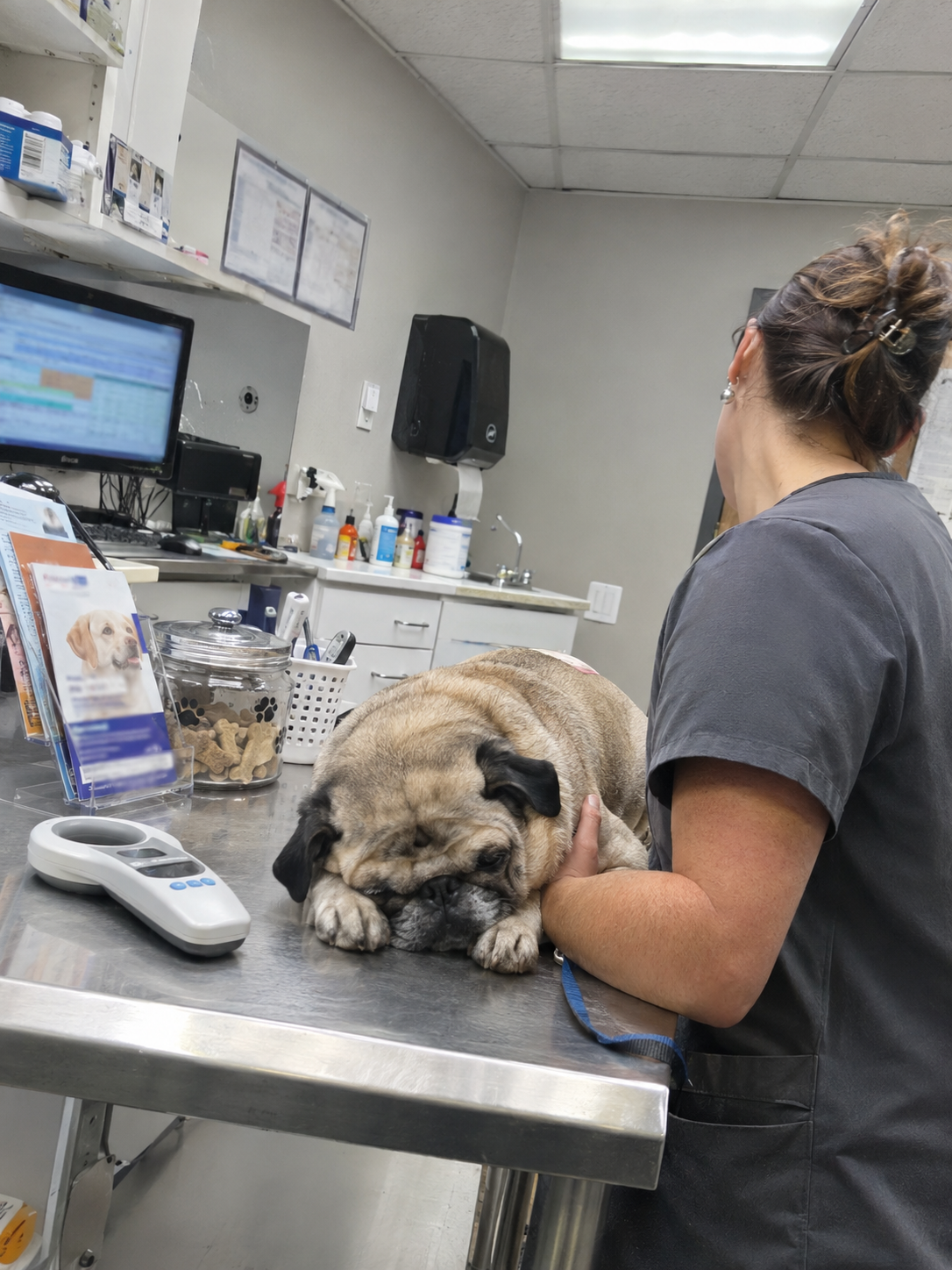
A microchip is a small capsule placed under your dog’s skin by a vet. It holds a number, and nothing else. It has no battery and no transmitter. When a vet or shelter passes a scanner over the dog, the scanner’s signal powers the chip for a moment and the chip replies with its number.
That number links to a record in a registry that holds your name and phone number. So a chip works only when three things happen: your dog is found, someone scans it, and the registry holds contact details that still work.
A chip cannot:
- show where your dog is,
- send you an alert when your dog leaves,
- be read from a distance by a passing person or a normal phone.
A phone cannot read a chip without an add-on, according to a vet video we compiled. Scanning happens at a vet clinic or shelter.
What a GPS tracker does
A GPS collar finds its own position from satellites and sends it to your phone over a cellular network, a radio or nearby phones. You can watch a live map and some models send alerts when your dog leaves an area. Our guide to how GPS trackers work covers the details.
A GPS tracker needs three things from the dog’s side:
- The collar has to be on your dog.
- It needs power. Battery life ranges from about a day or two to weeks, depending on the model.
- It needs a signal link, which differs by type and can fail in the countryside, indoors or near hills.
Is there a GPS microchip?
No. A pet tracker maker states that there is no GPS microchip for dogs. A chip has no battery to power a GPS receiver and no way to send a position by itself. Search terms such as dog GPS chip, GPS in dog microchips and tracking chip for dogs are almost always about a GPS collar. If a product claims to implant GPS, ask the maker how it gets power and a signal before you buy.
Side by side
| Microchip | GPS tracker | |
|---|---|---|
| What it does | Identifies your dog when scanned | Shows where your dog is |
| Power | None | Battery, needs charging |
| Signal | None, read by a scanner nearby | Cellular, radio or Bluetooth link |
| Shows location | No | Yes, while on and in range |
| Works if the collar comes off | Yes, it stays in the dog | No |
| Needs a registry record | Yes, with current details | No, but needs an app account |
| Ongoing cost | Not covered here, ask your vet | Usually a plan, see our home page |
We have no verified figure for microchip or registry costs, so we have left them out.
What happens when a found dog is scanned
Picture the usual route. Someone finds your dog and takes it to a vet clinic or shelter. Staff pass a scanner over the dog and read the chip number. They look the number up with the registry and call the phone number on record.
Every link in that chain has to hold. If nobody takes the dog to a scanner, the chip does nothing. If the record is out of date, the call goes nowhere. This is why a chip is a backup and not a search tool. It helps after your dog has been found by someone else, while a GPS tracker helps you do the finding.
Why the two get mixed up
The phrase “GPS chip” blends both ideas. Owners picture one small device that both identifies the dog and shows its location on a map. In real products those are separate:
- The chip sits under the skin and is read only by a scanner held close to the dog.
- The tracker sits on the collar, needs charging and talks to your phone or a handheld.
Because they are separate, a missing collar means no tracking, and a missing registry update means a chip that cannot reach you. Fixing both takes a few minutes of checking and, for the tracker, a plan and a charger. If you are still choosing a tracker, the how GPS trackers work guide explains the types, and our home page compares what each costs over three years.
Keep your registry details current
A chip with an old phone number is close to useless. A shelter source says to update the registry whenever your contact details change.
A simple routine:
- Find out which registry holds the chip number, usually from your vet or the chip paperwork.
- Check the phone number and address on the record.
- Update anything that has changed, and add a second contact if the registry allows it.
- Ask your vet to scan the chip at your next visit to confirm it reads.
What to buy
- If your dog has no chip: ask your vet about one. It is the lowest-effort backup.
- If your dog has a chip but no collar tracker: check your registry details, then consider a tracker if your dog bolts, hikes off lead or lives near open land.
- If your dog wears a tracker but has no chip: add one. A collar can fall off, run flat or lose signal.
For a lost dog today, see our guide on what to do when a dog runs off. If you are considering a cheap tag instead of a tracker, read how an AirTag compares with a GPS tracker.
To compare trackers by what they really cost over three years, start at our home page.